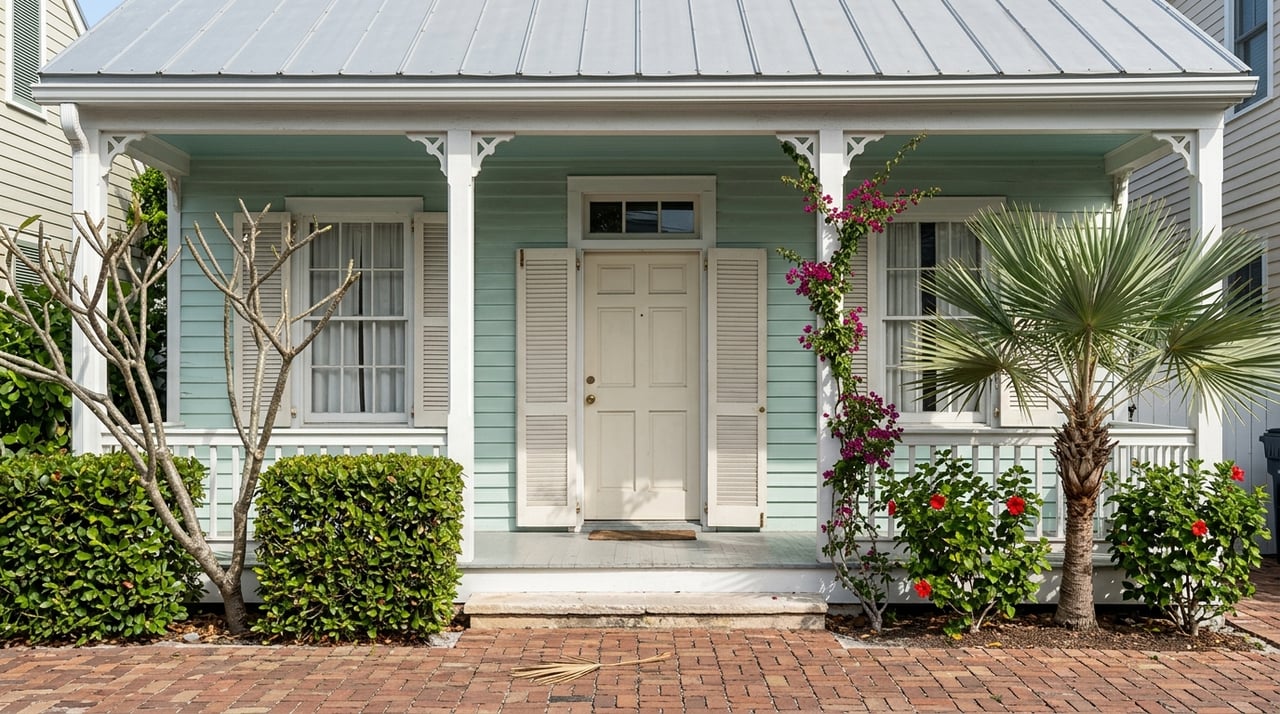
Buying a historic home in Key West can feel equal parts exciting and overwhelming. You may be drawn to the charm, porches, shutters, and island character, but you also need to understand what comes with owning an older property in a place shaped by preservation rules and floodplain regulations. If you are considering a historic Key West home, this guide will help you understand the architecture, approval process, inspections, and flood-related issues so you can move forward with confidence. Let’s dive in.
Key West has one of the country’s largest collections of historic wooden structures, and that gives the island a look and feel that is hard to replicate. Many of the homes you see today reflect generations of rebuilding and adaptation, especially after the Great Fire of 1886 destroyed hundreds of houses and other buildings.
As you explore Old Town and other historic areas, you will likely see several local house types again and again. These include cigar maker’s cottages, eyebrow houses, Bahama houses, single-gallery frame vernacular homes, and classical-revival or temple-form houses.
Many of these properties were designed for the subtropical climate. You will often notice wood cladding, raised construction, shutters, porches, and ventilation details that helped homes stay cooler and better suited to island weather.
In Key West, a building is considered historic if it is at least 50 years old and located in a historic zoning district or otherwise designated historic. Some buildings are also identified as historically contributing structures in the city’s HARC survey, and that classification can matter if major renovation plans come into play.
If you are serious about a property, one of your first steps should be confirming whether it is historic or contributing. That status can affect what changes are allowed and whether certain flood-related exemptions may apply later.
One of the biggest surprises for buyers is how different a historic Key West floor plan can feel compared with a newer home. Many older cottages were originally built small and expanded over time, so you may find compact rooms, additions at the rear, and a layout that reflects several eras of use.
That does not mean the home is flawed. It simply means you should expect character to come with quirks, and your renovation ideas may need to work within the existing structure rather than against it.
If you are dreaming about repainting, replacing windows, adding a deck, updating landscaping, or building an addition, do not assume you can start right after closing. In Key West’s historic district, exterior work is closely reviewed.
The city requires a Certificate of Appropriateness for new structures and for many types of exterior work, including repairs, alterations, painting or repainting, landscaping, fences, decks, signs, and demolition. The city also states that exterior work must receive HARC approval before a building permit is issued.
For buyers, this means renovation timing can be longer than expected. If your purchase depends on changing the exterior appearance or expanding the home, it is smart to understand the review process early.
Windows are one of the most important preservation details in a historic Key West home. The city generally expects historic windows to be repaired instead of replaced whenever possible.
When replacement is necessary, the new windows should match the original material and style. For houses that originally had wood windows, front and side windows are expected to be wood, and clear untinted glass is the standard the city looks for.
This can affect both renovation cost and project planning. If you are comparing several homes, it helps to look closely at the condition and authenticity of the windows before you make an offer.
A lot of buyers love the charm of a historic cottage but want more living space. In Key West, additions can be allowed, but the city’s design guidance favors a conservative approach.
Additions should be placed on less public sides of the property, remain smaller and lower than the original building, and stay compatible with the historic structure while still being distinguishable from it. In practical terms, dramatic exterior transformations are less likely to fit the city’s expectations than thoughtful, scaled additions.
If a home feels too small for your long-term needs, it is worth asking not just whether you can add on, but whether the likely result will still meet your goals.
In Key West, architecture is only part of the story. Floodplain rules are a major part of buying an older home, and they can affect financing, renovation plans, and insurance costs.
The city says most buildings and lots are in A flood zones, while shoreline properties are often in V zones. FEMA flood maps are the official standard for determining flood zone status in the city.
You should ask for the property’s flood zone information and any available elevation certificate as early as possible. The city notes that elevation certificates are used for new construction, substantial improvements, floodproofing projects, and map amendment requests, and they are also often relevant for insurance and lending.
For some pre-1975 buildings, an elevation certificate may be needed for insurance rating purposes. Getting this information early can help you avoid surprises late in the transaction.
This is one of the most important issues buyers overlook. In Key West, if cumulative repair, reconstruction, rehabilitation, additions, or other improvement work over a one-year period reaches 50 percent or more of the building’s market value, the project can trigger current flood-compliance requirements.
The city also states that this 50 percent rule applies to the building regardless of ownership. In other words, the calculation is tied to the building itself, not just the work you personally plan after you buy it.
That matters if you are purchasing a fixer-upper or a home that has already had recent work. A renovation budget that looks manageable at first can become much more complex if substantial-improvement rules are triggered.
Some historically contributing structures may qualify for FEMA historic-building exemptions in substantial-improvement situations. That can be helpful, but it is not a blanket pass on all flood-related requirements.
The city notes that equipment and utilities are not exempt from elevation requirements. So even if a contributing structure qualifies for an exemption, certain systems may still need to meet current standards.
This is why buyers should verify both the home’s historic status and its floodplain status before making renovation assumptions. Those two issues often overlap in ways that affect cost and feasibility.
Historic homes in Key West often need more insurance planning than buyers expect. If you are using a federally backed mortgage in a high-risk flood zone, flood insurance is required.
Beyond flood coverage, older homes may also trigger extra underwriting questions. Citizens Property Insurance states that properties more than 20 years old require a four-point inspection for property owner, dwelling, and mobile-home applications, with a focus on electrical, heating, cooling, plumbing, and roofing systems.
Roof age is another key issue. Citizens says roofs older than 25 years for soft roofs, or 50 years for hard roofs such as tile, slate, clay, concrete, or metal, need documentation showing at least five years of remaining useful life.
Florida also uses a statewide Uniform Mitigation Verification Inspection Form for wind-loss discounts. State law requires insurers to notify applicants and policyholders about available premium discounts for homes with wind-mitigation features, so this inspection may help you understand possible savings.
A standard home inspection is important, but historic wood homes in Key West often call for a broader due diligence plan. In many cases, the most useful inspection stack includes several layers.
Consider asking for:
That last one is especially relevant in Key West because so much of the historic housing stock is wood-frame, and Florida has four known types of termites, including dampwood and drywood termites.
If you are shopping for a historic Key West property, a little early organization can save a lot of stress later. The city’s review process, insurance questions, and flood-related paperwork can take more time than many buyers expect.
Here is a smart early checklist:
Buying a historic home in Key West is not just about finding charm. It is about matching the right property to your goals, timeline, and comfort level with preservation and floodplain rules.
For some buyers, that means embracing a smaller cottage with original details and minimal changes. For others, it means targeting a property where the layout, condition, and approval path make future updates more realistic.
The good news is that historic homes here offer a sense of place that newer construction rarely matches. When you go in with a clear understanding of approvals, inspections, flood issues, and insurance, you are in a much stronger position to buy wisely.
If you are thinking about buying a historic Key West home, working with a local agent who understands Old Town inventory, timing, and property-specific details can make the process far smoother. To start your search with trusted local guidance, connect with Stacey Pillari.

336 Duval St Key West, FL 33040
336 Duval St Key West, FL 33040