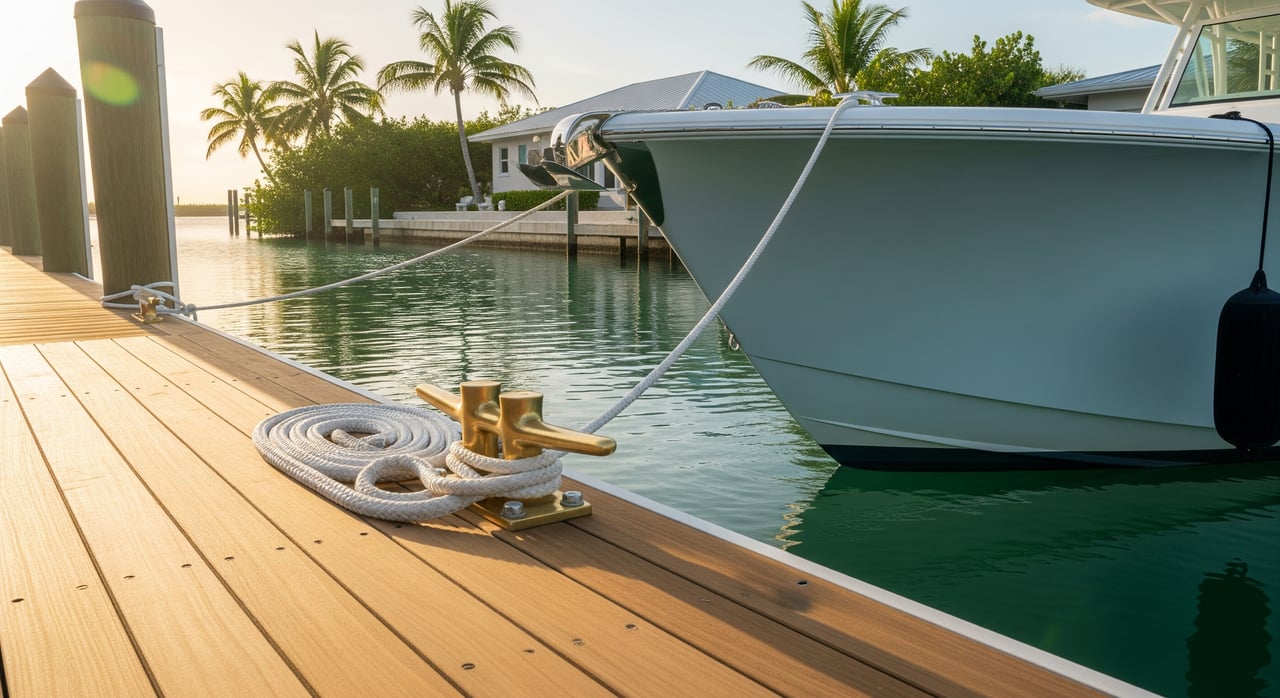
Picture this: you step out to your Key Haven patio, press a button, and you’re off to open water in minutes. To make that vision real, your dock has to match your boat and your lifestyle. In this primer, you’ll learn the dockage terms that matter in Key Haven and how to vet a property with confidence. Let’s dive in.
Key Haven boating basics
Key Haven is a canal-front neighborhood in the Lower Florida Keys with man-made canals that connect to nearby channels and open water. The area features shallow bottoms, seagrass beds, and coral outcrops, so boat size and draft are key. Tides are modest, but low tide still affects clearance under the hull and bridge heights. Many in-water changes require permits at the county, state, and federal level, so plan ahead before altering any shoreline or submerged land.
Canal width and turning room
Canal width is the distance between opposing shorelines where boats pass. It affects whether two boats can safely meet and whether you can swing your bow without clipping a piling. Turning room is just as important as the dock itself.
Use this quick check:
- Measure the clear navigation width at mean low water and note any obstructions.
- Compare your boat’s required turning diameter to the open-water area near the dock.
- Watch how neighbors maneuver in different wind and tide conditions.
Depth and draft
Depth is the water from the surface to the bottom. Draft is how deep your hull sits below the waterline. In shoal-prone canals, you need enough water at low tide plus a safety margin for comfort and propeller health.
What to verify:
- Ask for recent soundings and any dredging history or maintenance records.
- If none exist, commission a professional sounding at mean low water.
- Confirm the approach channel is as usable as the slip itself.
Beam, slips, and pilings
Beam is your boat’s maximum width and drives how a slip is configured. You need room for fenders, lines, and safe boarding.
Measure and match:
- Check slip width, distance between pilings, and neighboring dock clearances.
- If a lift is present, confirm cradle width and rated capacity fit your boat with fuel and gear.
- Ensure cleats and hardware are positioned to protect your hull.
Air draft and overhead clearance
Air draft is the distance from your waterline to the highest fixed point on your boat. Fixed bridges, utility lines, and even trees can limit access.
Before you buy:
- Validate bridge and overhead clearances at mean high water plus a sensible margin.
- Consider whether antennas or towers can fold and how that changes your usable route.
Dock orientation and approach
Dock orientation relative to wind and canal flow changes how easy docking feels. A clean approach reduces stress and risk of damage.
On-site observations:
- Note the typical wind direction and whether the canal funnels gusts.
- Evaluate whether the approach angle reduces usable slip length.
- If possible, perform a trial run with a local captain.
Lifts and davits
Lifts and davits protect your hull and simplify maintenance, but they must be sized and permitted correctly.
Buyer checks:
- Verify the lift’s rated capacity matches your boat’s real weight, including engines, fuel, and water.
- Confirm beam limits of the cradle and overall slot width.
- Inspect cables, winches, and corrosion protection; saltwater accelerates wear.
- Ensure the installation was permitted and complies with Monroe County and state rules.
- Check shore power type and that marine circuits are GFCI protected.
Utilities, fueling, and pump-out
Shore power and water make boating easier. On-site fueling is regulated, and pump-out access matters for comfort and compliance.
Confirm the basics:
- Availability of 30A or 50A shore power and how it is metered.
- Potable water lines in good condition and protected connections.
- Proximity to pump-out service providers if none is on site.
Seawalls, materials, and maintenance
Dock safety depends on what you cannot see. Seawall condition and material choices affect longevity and upkeep.
What to look for:
- Seawall undermining, spalling, or tie-back issues that compromise dock stability.
- Pilings for marine borer damage and corrosion on metals.
- Decking material and traction, especially where wakes hit.
Maneuvering and safety in canals
Key Haven canals can funnel wind and carry wakes from passing boats. Even modest currents affect slow-speed handling.
Practical tips:
- Observe the canal at different tides and times of day to gauge wake and wind.
- Check lighting for night approaches and visibility of any markers.
- Confirm life rings, ladders, proper bonding and grounding, and GFCI shore power.
Environmental rules and permits
Many shoreline activities require permits. Ownership of upland property does not automatically allow dredging or dock changes. Protected seagrass, mangroves, and coral areas limit what is allowed.
Before altering anything:
- Consult Monroe County Planning and Environmental Resources and the Building Department for local rules and permits.
- Review guidance from the Florida Department of Environmental Protection and the Florida Fish and Wildlife Conservation Commission on submerged lands and seagrass.
- If adjacent to sanctuary waters, review Florida Keys National Marine Sanctuary considerations.
Due diligence checklist for buyers
Use this plan to confirm a dock that looks good also works for your boat.
Documentation and records:
- Request dock drawings, permit history, and any recorded easements or seawall agreements.
- Verify the dock and lift are included in the deed and free of unresolved violations.
Inspections and surveys:
- Obtain a current survey showing the mean high water line and dock placement.
- Commission a marine inspection for pilings, framing, fasteners, and lift condition.
- Get recent soundings for the approach channel at mean low water.
Operational tests:
- Schedule a tide and wind trial with a local captain to practice approaches.
- Load test lifts or davits if you will rely on them.
Legal and cost items:
- Confirm any past dredging was permitted and whether future dredging is feasible.
- Review HOA or neighborhood rules that may limit boat length, beam, or mooring practices.
- Estimate routine maintenance, lift service, utilities, and insurance risks tied to storms.
Smart questions to ask:
- What is the minimum depth at the dock entrance during low tide?
- When was the last sounding or dredge and are records available?
- How wide is the clear navigation channel at mean low water and are obstructions recorded?
If the channel is too shallow
You have options, but each has tradeoffs.
Consider:
- Permitted dredging where allowed, noting it is often costly and highly regulated.
- Choosing a shallower-draft boat that fits the existing conditions.
- Selecting a different property with suitable depth and turning room.
Your next step in Key Haven
If you want a dock that performs as well as it photographs, match vessel specs to real, verified site conditions. With the right checks, you can enjoy easy launch days and peace of mind about permits, power, and long-term maintenance.
Ready to align the right Key Haven home with the right dock? Reach out to Stacey Pillari for local guidance, vetted resources, and a smooth path from walkthrough to wake.
FAQs
What does canal width mean for Key Haven docks?
- It is the clear distance boats use to pass and turn at mean low water, which dictates safe maneuvering and realistic vessel size.
How do you confirm depth and draft at a Key Haven home?
- Get recent soundings at mean low water, review any dredging records, and keep a safety margin under your keel at low tide.
What should you verify about a boat lift before closing?
- Confirm permitted status, rated capacity with full fuel and gear, cradle width for your beam, and GFCI-protected shore power.
Why does air draft matter in Key Haven canals?
- Fixed bridges and overhead lines can limit access, so measure your highest point and verify clearance at mean high water.
What are the rules around dredging near a private dock?
- Dredging is tightly regulated and may require county, state, and federal permits, with limitations in protected seagrass and coral areas.
Who should inspect a dock and seawall before purchase?
- Hire a marine surveyor or experienced marine contractor to assess pilings, framing, hardware, lift systems, and seawall integrity.